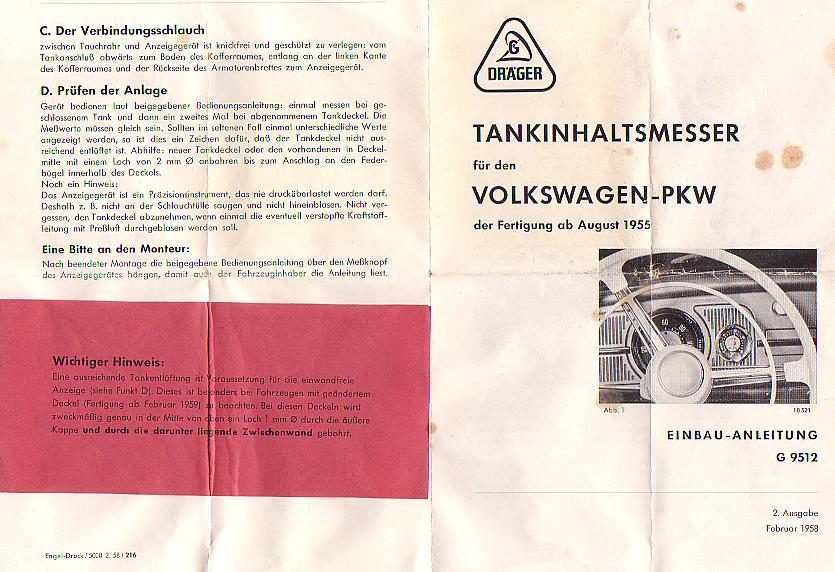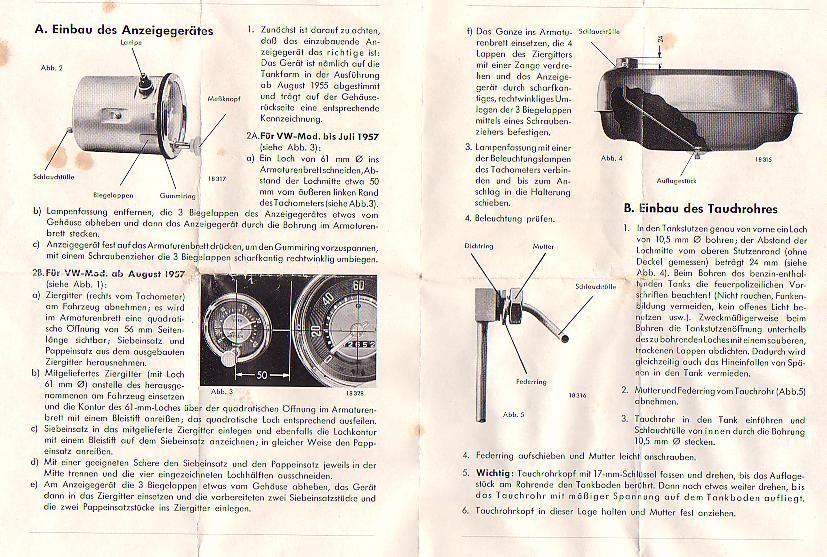
Ludziska udało mi się zakupić oryginalny licznik paliwa DRAEGER ("A"ze zmiękczeniem;) .Wpasowałem go w miejsce oryginalnego wskaźnika (posiadam Garba z 1962 roku) czyli po prawej stronie prędkościomierza..Licznik jest sprawny i doprowadziłem już go do ładnego stanu natomiast teraz potrzeba pogłówkowac jak go podłączyć i dlatego zwracam sie do Was z prośba o pomoc.
Mianowicie w moim modelu standardowy wskaźnik paliwa był podłaczony do zbiornika za pomoca linki a w zbironiku był pływak - prosta sprawa.Natomiast ten wskaźnik pokazuje wskazanie stanu ilości paliwa na podstawie cisnieniowego/prózniowego odczytu.Czyli z licznika wychodzi tylko kawałek metalowej pól centymetrowej tulei i do tego rozumiem podłacza się węzyk taki jak np od spryskiwacza i prowadzi do zbiornika paliwa..Ok i co dalej?Jak ma nastapic odczyt?W samym wsazniku jest przycisk, który działa na zasadzie pompki.Dmuchajac we wspomniana tuleje wskaznik reaguje zmiana i wychyleniem wskazówki..
Niestety nie moge znaleźc nigdzie całego licznika w komplecie z reszta a jest to niebywała perełka dla garbusiarzy dlatego zwracam sie do Was o pomc i sugestie w montazu.
Pozdrawiam
Marek
Mianowicie w moim modelu standardowy wskaźnik paliwa był podłaczony do zbiornika za pomoca linki a w zbironiku był pływak - prosta sprawa.Natomiast ten wskaźnik pokazuje wskazanie stanu ilości paliwa na podstawie cisnieniowego/prózniowego odczytu.Czyli z licznika wychodzi tylko kawałek metalowej pól centymetrowej tulei i do tego rozumiem podłacza się węzyk taki jak np od spryskiwacza i prowadzi do zbiornika paliwa..Ok i co dalej?Jak ma nastapic odczyt?W samym wsazniku jest przycisk, który działa na zasadzie pompki.Dmuchajac we wspomniana tuleje wskaznik reaguje zmiana i wychyleniem wskazówki..
Niestety nie moge znaleźc nigdzie całego licznika w komplecie z reszta a jest to niebywała perełka dla garbusiarzy dlatego zwracam sie do Was o pomc i sugestie w montazu.
Pozdrawiam
Marek